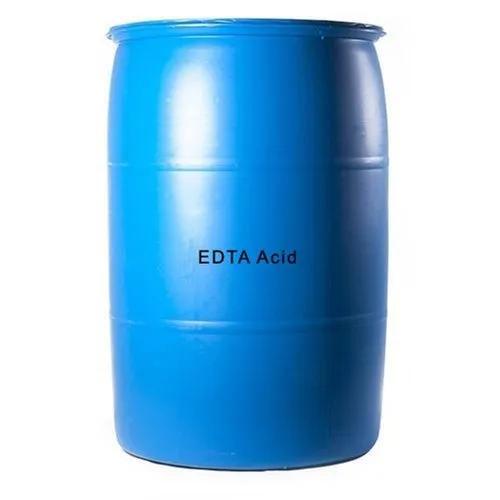
About EDTA Acid
| Brand |
Navneet Chemicals |
| Usage |
Used In Management And Treatment Of Heavy Metal Toxicity |
| Form |
Powder |
| Grade Standard |
IP |
| Packaging Type |
Bag |
| Purity |
Greater than 99% |
Ethylene Diamine Tetra Acetic Acid (EDTA) is a versatile and widely used chelating agent. It is a white, crystalline powder or granular substance that is highly soluble in water. EDTA works by forming stable, water-soluble complexes with metal ions, effectively "binding" them and preventing them from reacting with other substances. Due to these properties, EDTA is used in numerous industrial, pharmaceutical, and cleaning applications, particularly where metal ions need to be controlled or removed.
Versatile Chelating Agent for Industrial ApplicationsEDTA Acid serves as a highly effective chelating agent, binding metal ions and preventing scale formation in water treatment systems. Its versatility encompasses personal care formulations, cleaning and cosmetic industries, and agriculture, where it enhances micronutrient availability and process efficiency. Sourced from certified manufacturers in India, its dependable performance meets international standards.
Safe Handling and Storage RecommendationsEDTA Acid should be stored in a cool, dry, and well-ventilated environment, away from incompatible materials to maintain quality and safety. As an odorless and tasteless solid, its handling requires standard laboratory precautions. Always adhere to industrial storage guidelines to optimize longevity and maintain its chelating efficacy.
Benefits in Water Treatment and AgricultureIn water treatment, EDTA Acid effectively removes scales and controls metal ion concentrations, ensuring system longevity. In agriculture, its chelating properties improve micronutrient delivery to plants, promoting healthy growth and maximizing yield, making it a valuable solution for sustainable practices.
FAQs of EDTA Acid:
Q: How is industrial grade EDTA Acid typically used in various industries?
A: Industrial grade EDTA Acid is primarily utilized as a chelating agent, binding with metal ions to prevent undesirable reactions. It finds applications in water treatment, cleaning products, personal care formulations, cosmetics manufacturing, and as a micronutrient carrier in agricultural solutions.
Q: What are the main benefits of using EDTA Acid in water treatment processes?
A: EDTA Acid effectively removes scale and prevents metal corrosion by chelating metal ions in water systems. This improves equipment lifespan, enhances water quality, and optimizes system performance, making it indispensable for industrial water treatment.
Q: Where should EDTA Acid be stored to ensure its longevity and safety?
A: EDTA Acid should be stored in a cool, dry, and well-ventilated area, away from incompatible materials. Proper storage preserves its integrity and ensures safe handling by reducing the risk of decomposition or adverse reactions.
Q: What is the process for using EDTA Acid in agricultural micronutrient solutions?
A: EDTA Acid is added to micronutrient formulations to chelate essential metal ions, increasing their solubility and absorption by plants. This process supports better plant health and ensures optimal yield in agricultural operations.
Q: When should EDTA Acid be used in cleaning or personal care applications?
A: EDTA Acid is commonly incorporated during formulation stages of cleaning and personal care products to enhance product stability and efficacy. It controls metal ion activity, improving texture and shelf life of finished products.
Q: How does EDTA Acid benefit cosmetic manufacturing?
A: In cosmetics, EDTA Acid prevents metal-catalyzed degradation, maintains desired product consistency, and ensures long-term stability. These benefits enhance consumer safety and satisfaction, making it a key component in industrial cosmetic formulations.





 Send Inquiry

